
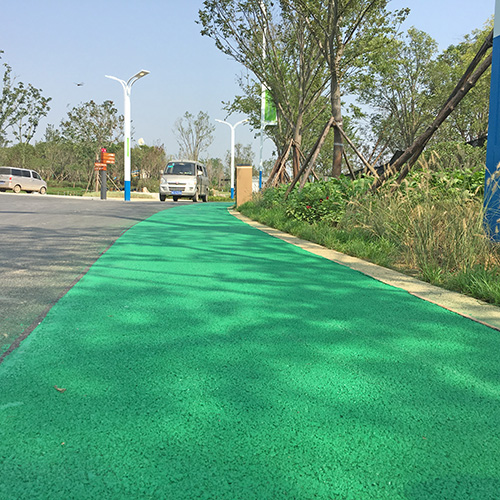
I. Origin and Development
The origin of colored anti-slip pavement can be traced back to the late 20th century. At that time, some European countries began to apply colored pavement materials with anti-slip properties in roads and underground parking lots to enhance safe driving. With the continuous development of technology and the improvement of raw materials, colored anti-slip pavement has gradually become a commonly used asphalt pavement and has been widely applied in municipal roads, industrial parks, schools and other places.
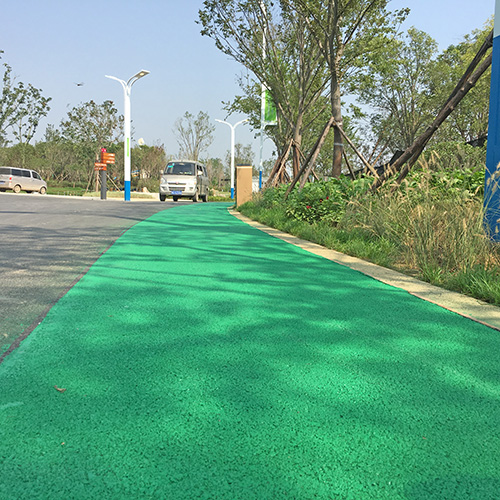
Ii. Raw Materials
The main raw materials of colored anti-slip pavement include polyurethane materials, rubber, silicone resin and other fiber materials. All kinds of materials possess excellent properties such as wear resistance, corrosion resistance and high-temperature resistance, which can ensure the reliability and sustainability of the road surface. In addition, the color paste used in the colored anti-slip pavement must also possess properties such as weather resistance, UV resistance, and solvent corrosion resistance to ensure the continuity of the pavement color and its anti-slip performance.
Iii. Processing Technology
The production process of colored anti-slip pavement mainly includes two forms: hot pressing and cold coating construction. Hot pressing forming is a kind of ultra-high pressure and high-temperature process method. It involves melting the raw materials of colored anti-slip pavement at high temperatures and then pressing them into shape. It has very high hardness and relatively good durability. Cold coating construction is a method of painting on the ground by using special coatings, which has the characteristics of simple operation, quick drying and rich colors.

 Tel:400-168-5168
 Web:www.sprpaint.com
 Headquarters Address:No. 8, Building 7, Science Road 10, Songshan Lake Industrial Zone, Dongguan City, Guangdong Province
 Douyin QR code
 Corporate culture
 Project Case