
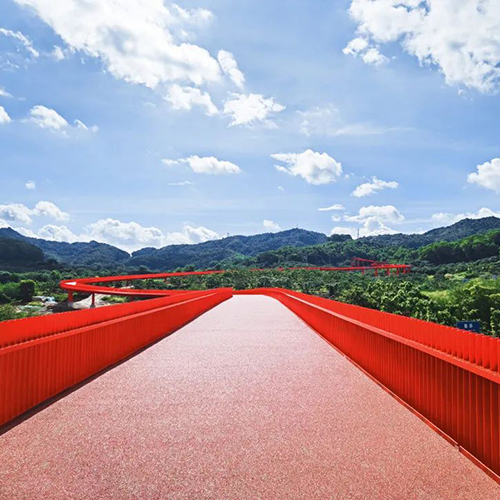
What are the characteristics of permeable pavement
Source of the article: Frequently Asked Questions. Responsible editor: Spore Fine Chemicals (Guangdong) Co., LTD. Publication time: July 28, 2022
What are the characteristics of permeable pavement
1. High water permeability. Permeable pavement has 15% to 25% porosity, which enables a permeability rate of 31 to 52 liters per square meter per hour, far exceeding the drainage speed of the most effective precipitation in the best drainage pipeline configuration.
2. High load-bearing capacity. According to the assessment of the national testing administrative authority, the load-bearing capacity of permeable pavement can fully meet the load-bearing standards of C20-C25 concrete, exceeding the load-bearing capacity of ordinary permeable bricks.
3. Good design effect. Permeable pavement has a color enhancement configuration plan, which can assist interior designers in creating unique artistic ideas and maintaining the decorative style required by different environments and personalities, which is also difficult to achieve with ordinary permeable bricks.
4. Easy maintainability. The key concern about pore blockage is unnecessary. The unique permeable laying system software makes it easy to handle simply by high-pressure water cleaning.
5. Freeze-thaw resistance. Permeable pavement has a stronger resistance to freeze-thaw cycles than ordinary concrete pavement and is less likely to crack due to the influence of freeze-thaw. This is because its structure itself has a large number of pores.
6. Durability. The durability and wear resistance of permeable pavement are better than those of asphalt and close to those of ordinary pavement. However, it inevitably has the disadvantages of short service life and uneconomical use that are common in permeable bricks.
7. High thermal conductivity. The relative density of the material itself is relatively low (with 15-25% gaps), which reduces its heat storage capacity. The unique pore structure prompts the lower underground temperature to be transferred to the road surface, thereby lowering the temperature of the entire paved area. These features make the permeable pavement system approach the road surface covered by natural vegetation in terms of heat absorption reaction and heat storage function.

 Tel:400-168-5168
 Web:www.sprpaint.com
 Headquarters Address:No. 8, Building 7, Science Road 10, Songshan Lake Industrial Zone, Dongguan City, Guangdong Province
 Douyin QR code
 Corporate culture
 Project Case